
How to Sell CS2 Skins for Real Money in 2026 Without Getting Scammed
There are three main ways to turn your CS2 skins into real money: marketplaces (best profit, takes time), instant-sell sites (fast but not the best rates), and direct trading (very risky but decent rates). Your choice depends on whether you prioritize money, speed, or convenience.
Your Three Cash-Out Options
Depending on your priorities, you have different routes, but keep in mind that after Valve's trade protection update, each method has been significantly affected.
The 7-day trade hold has fundamentally changed how every platform operates, eliminating much of the speed advantage that made certain options attractive while introducing new risks and delays across the board.
1. Marketplaces (Best money, requires patience)
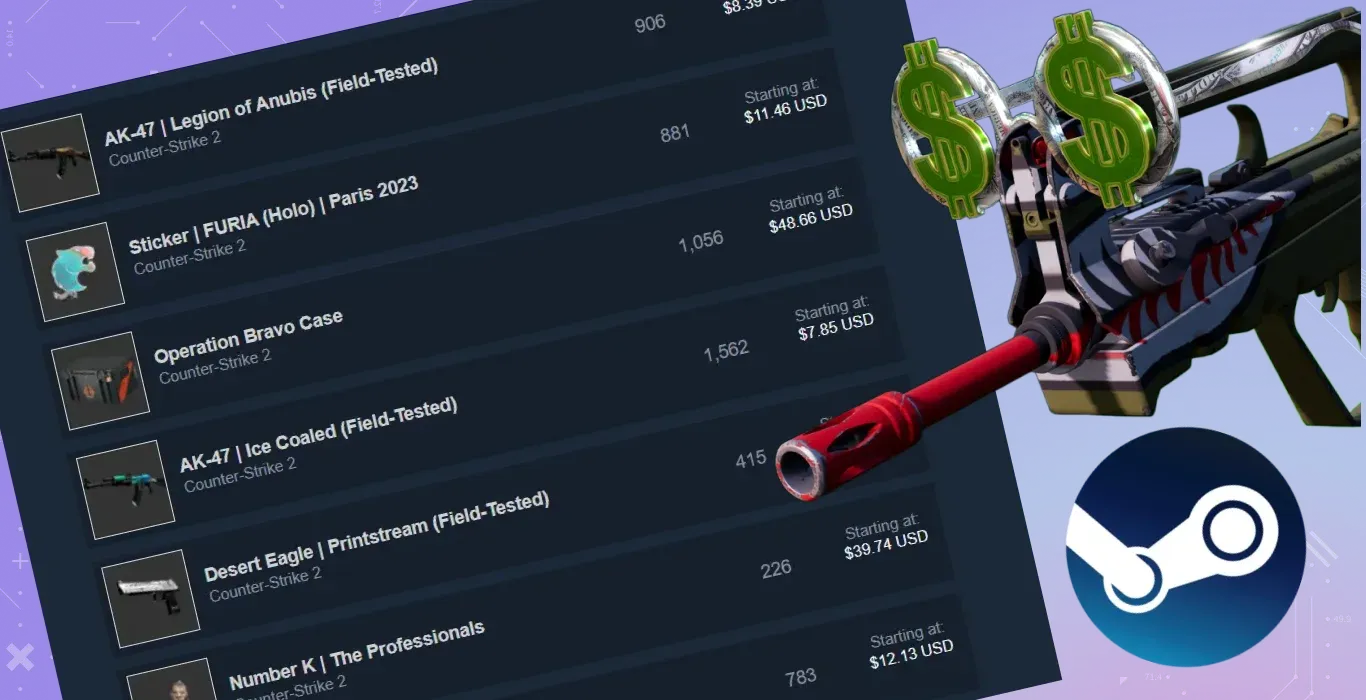
The most popular and effective place to sell your skins for the best price is a third-party marketplace. Players can buy and sell skins directly with each other, and the website works as a secure middleman for the transaction.
How Marketplaces Work
- You list your skin at a price you choose.
- You send the item to the marketplace's secure trade bot for safekeeping.
- You wait for another player to purchase it.
- You cash out the funds (minus a small fee) to your bank or crypto wallet.
Now, based on the platform, the process is a bit different due to Valve's 7-day Trade Protection.
On a P2P marketplace: your item is visible on the site instantly, but the platform holds your money for the 7-day period after it sells to secure the transaction. On a bot-based marketplace: the opposite happens. There is a 7-day delay before your item is even visible on the site, then you are fine to go.
Pros
- Highest Profit: You get the most real money for your items, far more than instant-sell sites and without the 15% Steam tax.
- Full Control: You set your own price and can adjust it anytime.
- Security: A reputable marketplace eliminates the risk of being scammed, which is rampant in direct trades.
Cons
- Requires Patience: Your item isn't sold instantly. It could take minutes, days, or even weeks for a buyer to appear. This is the biggest trade-off.
- Commission Fees: While low (typically 2-10%), most sites still take a small cut of your sale.
- Risk of Scam Sites: You must ensure you are on a legitimate, well-known marketplace. Fake sites are common.
- Verification: Cashing out usually requires some form of identity verification (KYC) for legal reasons.
For a safe and reliable experience, stick to the top Platforms, like Skinrave.GG, (0% fees) and CSFLOAT (2% fees).
2. Instant-Sell Sites (Terrible money, ultimate speed)
Instant-sell platforms were hit hardest by Valve's 7-day trade protection update. Before the update, you'd receive 50-70% of your item's market value, paying a massive fee essentially for the instant payment feature. While expensive, at least you got what you paid for: instant payouts.
Now, that model is broken. If sites paid instantly, sellers could take the cash then reverse the trade to scam the platform. To prevent this risk, sites must hold payments until the reverting period of 7 days ends, removing their speed advantage while keeping terrible rates.
However, some platforms are finding ways to work around this. For example, Skinrave.gg was the first platform to introduce an instant payout feature (but only under specific, risk-controlled conditions):
- Trusted Users: Level 30+ users can cash out part of the value instantly
- Partial Payments: The value of how much you can get instantly depends. So usually for more valuable items, you'll get only a portion instantly, and for the rest of your sale value you still have to wait 7-8 days for the process to complete.
The platform assumes the financial risk of reversals as a premium feature for loyal users and competitive advantage over competitors who make everyone wait.
3. Direct P2P Trading (Good money, very high risk)
P2P trading exchanges skins for cash without marketplaces, avoiding fees but relying entirely on trust. The system works on "cash rep," where whoever has less reputation sends first and takes the initial risk.
Valve's 7-day "Trade Protection" made this much worse, creating new dangers for both parties. A buyer can now pay for a skin, only for the seller to reverse the trade days later and take it back.
While some private groups still use P2P to avoid fees and KYC, the combination of these new, unavoidable risks with existing threats like impersonators and API scams makes it an extremely poor choice for most people.
Security Essentials (Non-negotiable)
- Enable Steam Guard Mobile Authenticator - trading is impossible without it
- Check your API key: Go to steamcommunity.com/dev/apikey - if there's a key you didn't create, you're compromised.
- Never click links in DMs
- Verify every trade: Check recipient's account age, level, and exact items in the Steam mobile confirmation
Conclusion
The CS2 skin market involves real money, so approach it with caution. There's no "free lunch" in this world, you'll always sacrifice convenience for profit or vice versa. Choose your method based on your priorities and needs.
Most importantly: Security first, profit second, because losing a bit of profit is always better than losing everything
Also, remember that if you're making serious money (€10,000+ annually in the EU for example), you likely owe taxes. Most traders ignore this, but it's a genuine legal requirement that can cause significant issues.