How to Get Better at CS2: The Ultimate Training Guide
Playing a favorite game is one of the best stress-relief methods. But that only works if you're good at what you do. Winning even just one match gives you a huge dose of dopamine and improves your mood.
Alternatively, dying at the beginning of each round and losing can be really irritating. That is why it's important to work on your skills and knowledge.
While only you can make it happen, this article will set you on the right track and provide guidance on how to improve at CS2.
Aim and Shooting
The most important part of the game is the ability to shoot with precision. If you can't shoot your enemies, there's not much that you can do in the game.
To improve your aiming, many skilled and pro players suggest using aim maps, where you can take your time, aim well, and shoot. With time and practice, your reaction will be faster, and your shots more accurate.
But shooting is more than just aiming. When you take a weapon, you also need to deal with its recoil. Some aim maps also provide a way to practice for recoil.
Also, some situations require using prefire, which is the case where you start shooting before peeking to maximize your chances of hitting the opponent.
The latest Rush Hour update also introduced silent reloads and soundless sniper unscoping, both of which can make you less noticeable to nearby enemies. While it won't replace good positioning or timing, understanding these mechanic can give you an extra advantage when trying to stay unpredictable during a round.
After learning the essentials, it's crucial to be able to use them for different types of weapons. Switch your weapon after several kills, or play Deathmatch mode, where you get a random weapon set with each spawn, or Arms Race mode, where you need to kill the enemies to improve your weapon. Those are all the essentials for the start.
Next comes your movement.
Movement and Positioning
Even when your aim is great, awkward movement can kill your potential instantly. For example, when you're just running a site, hoping that your enemy will not shoot you, that is exactly what will happen.
Better movement in CS2 includes the mastery of strafing and counter-strafing, air strafing, bhopping, peeking, and much more.
Some of the best ways of improving your movement are KZ maps, passing which requires all those skills, and simple aim maps for strafing and peeking.
But to move like a pro, you should know the tricks and map specialties as well.
Map Knowledge and Utility
Despite the map you play on, you cannot play effectively unless you know from where the enemy might hit you.
Study the map callouts for the Active Duty Maps, and watch some pro games to have some sense about sneaky spots and common positions.
Along with that, mastering utility is a must. Think you can rush without utility? Try it against a good team – you won't last 5 seconds. Whether you're attacking a site or defending it, your effectiveness depends on how well you use utility.
If you throw a flash, which only flashes your teammates, you hurt more than you contribute to victory. The same goes for molotovs, grenades, and smokes. Their goal is to hurt the enemy, force them into repositioning, and stop their way in if you’re holding a site.
Some common smoke lineups are easy to learn, but extremely beneficial in the game. The MongolZ, one of the best teams in the game, have shown what perfect utility executions can achieve. They create the chance with utility and get the best out of it.
Now, imagine you have the skills. What's next? You need to utilize them in the best possible way – have a good strategy.
Game Sense, Roles, and Strategy
When you let everyone choose what they do, the game quickly transforms into chaos, where teammates have no idea about each other.
The first and foremost thing is deciding your strategy for the round. Are you rushing B? Or is someone faking B while others wait near the A site?
Along with the tactic, your team should work out each one's role. Usually, the most experienced one takes the responsibilities of the IGL (In-Game Leader), while the others do what they do best. If you're good at sniping, you should specialize in it, while others provide support with rifles.
With the combination of the roles, correct utility execution, and the overall strategy, your team can enter any site, defend any site, and win its games with no sweat.
But all this will work only, and only, if the team communicates well.
Communication and Teamwork
If you're not playing with your friends, chances are high that you'll have teammates who have no microphone and do not communicate at all. They don't listen to your tactics, don't tell you information on the enemy team, and practically open up a gap to losing the game.
To avoid that, all teammates should constantly talk with each other, exchange information, and work together. But it's not only about talking. When rushing a site, you have the same goal, and, consequently, should cover each other's weak spots. If your teammate's looking at one spot, check the other one instead of standing next to him and doing the same thing.
Track Your Growth
Making progress in your skills is great, but you need to track your growth with some measures. The game provides you with several metrics that interpret your stats into useful information: ADR, KDR, UD, and EF.
ADR, or Average Damage per Round, calculates how much impact, in terms of damage, you have on the enemy team on an average round. It is calculated by dividing the total dealt damage by the number of rounds. Usually, having an ADR between 80 and 90 is considered good.
KDR, Kill/Death Ratio, shows how many kills you've made, compared to the number of deaths you've had. It usually goes great with ADR. You can have a high ADR, but a low KDR, which means that you only do damage – you don't kill much.
UD, Utility Damage, shows how much of the total damage you've dealt using utility. It helps you track the effectiveness of the molotovs and grenades you throw. If you throw a nade without dealing any damage, maybe you should save that money or allocate it to something more beneficial.
EF, Enemies Flashed, shows how many enemies your flashbang flashed. As with the UD, your flashbangs might not be effective at all. That is why it's important to track these metrics. They show how well you're performing and highlight the flawed areas that need improvement.
Mental Game and Physical Health
Although the in-game skills and knowledge are important, a huge role in your performance plays your physical and mental condition.
For your brain to be able to process all the information and react quickly, you should be relaxed. Bad sleep, fatigue, and similar conditions negatively affect your performance, even if your skills are great.
Make sure you sleep well, eat well, and don't burn out at your job or studies. That helps not only your game performance, but also your life experience.
Settings and Equipment
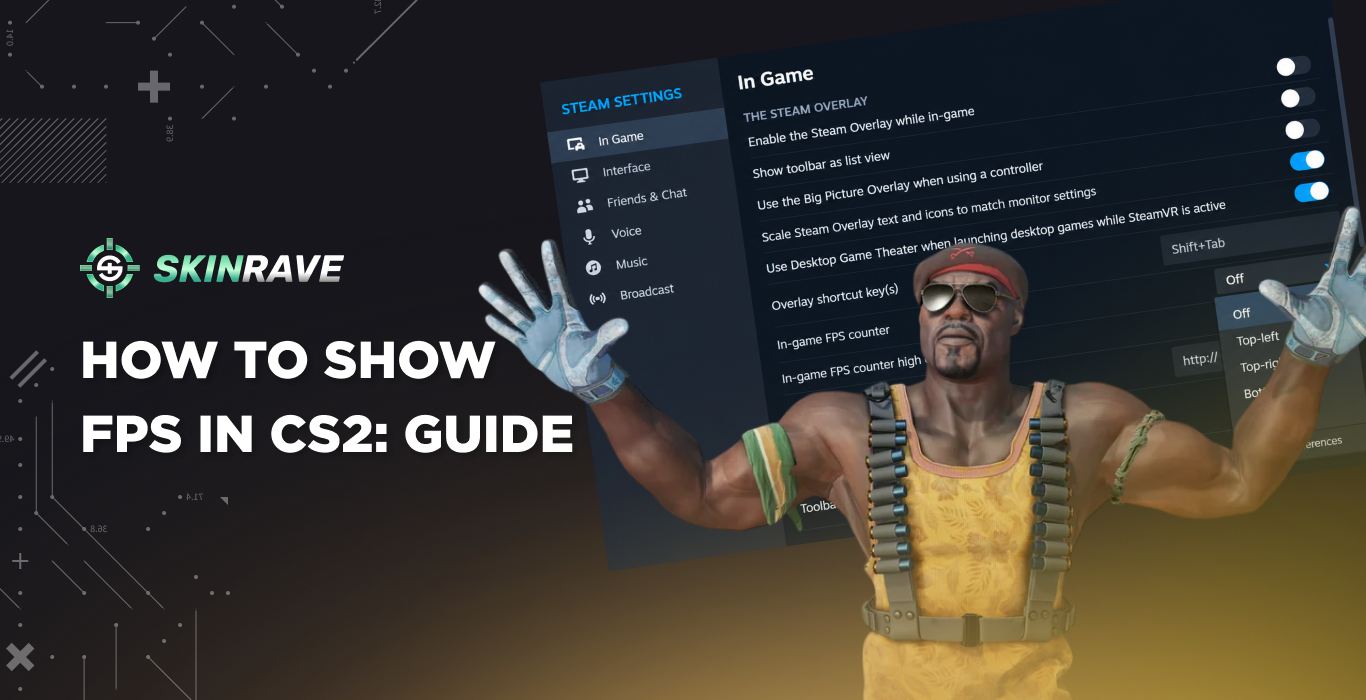
The last thing that we're going to talk about is your settings and gear. Even the best players cannot deliver good games with 20 fps. That is why you need to optimize your settings – to get the most out of your computer. Try using a pro player's settings, like donk, you m0NESY, not to waste time on figuring out the best settings for yourself. The pros already have them tested.
Lastly, we all know that assembling a good PC requires a lot of money. But with the development of technology, nowadays, it's much cheaper to assemble a computer that will still run games smoothly without breaking your wallet.
You don't need the absolute best equipment if you're an amateur player. Try saving up some money to upgrade your PC to avoid losing because you lag.
Conclusion
Although most players play CS2 for fun, it's important to work on your skills and game knowledge to make the most out of your experience.
Maybe a 15-minute warm-up in a Deathmatch, or a quick KZ map before a game, may not seem like much. But believe me, their effect on your performance is exponential. With time and practice, you'll skyrocket to the top of leaderboards – hitting every shot and winning all the games.